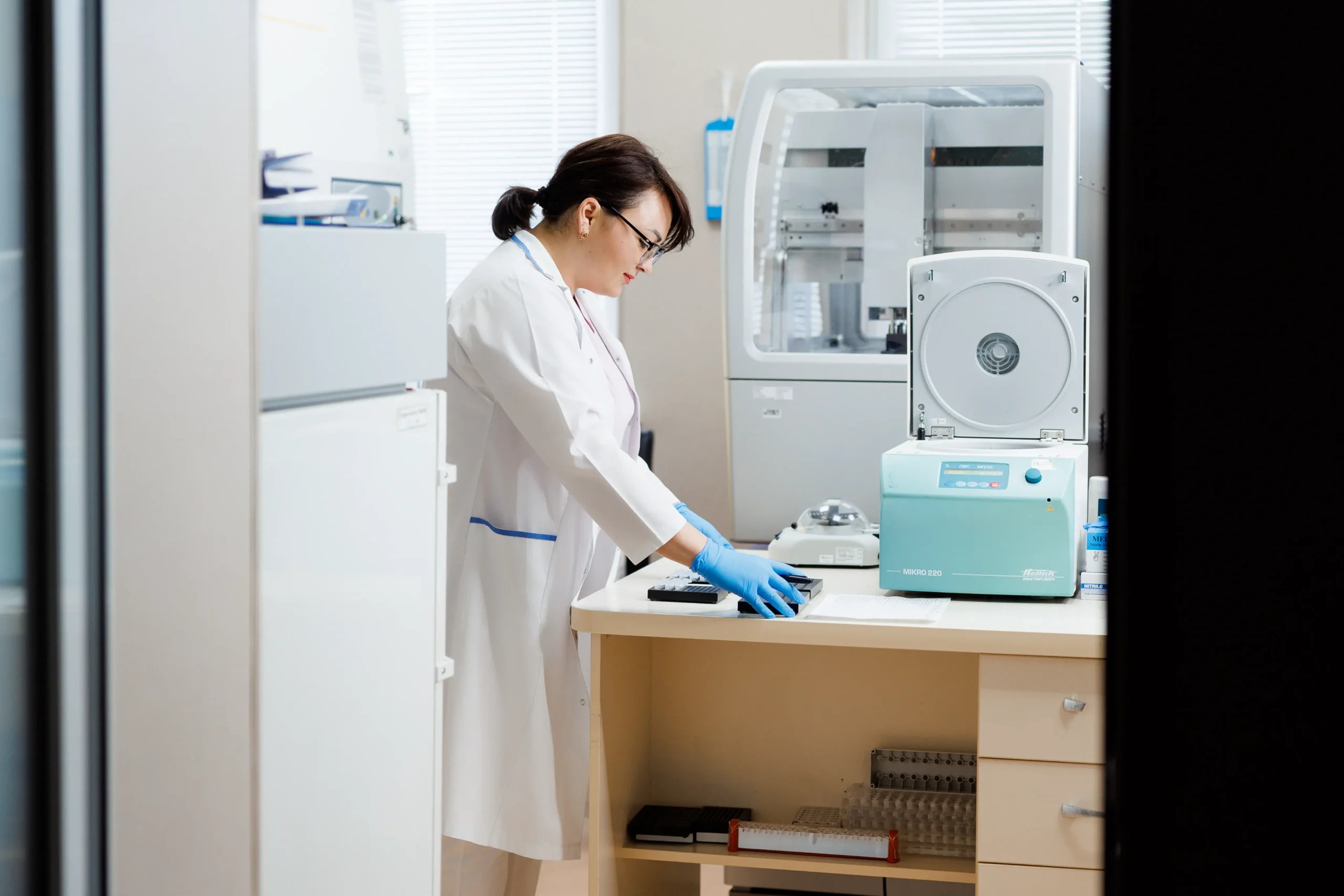
Molecular biology (PCR)
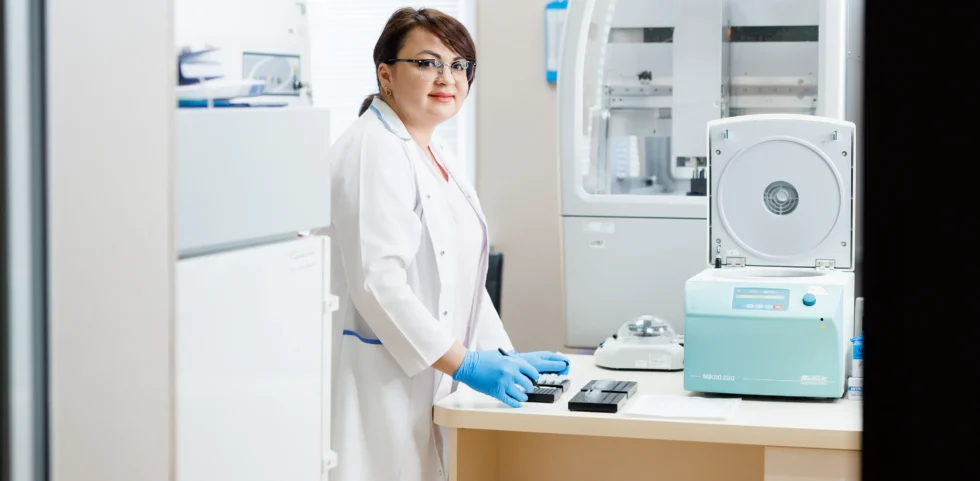
Molecular biology enables the detection of the genetic material of viruses, bacteria, and other pathogens using modern PCR methods with high sensitivity and accuracy.
The following tests are performed in the department:
Hepatitis viruses
- Qualitative hepatitis C virus (HCV) RNA
- Quantitative hepatitis C virus (HCV) RNA
- HCV genotyping (1a, 1b, 2, 3a, 4)
- Qualitative hepatitis D virus (HDV) RNA
- Hepatitis D virus (HDV) RNA quantitative
- Hepatitis B Virus (HBV) DNA, qualitative test
- Hepatitis B Virus (HBV) DNA, quantitative test
- HBV Genotyping (A, B, C, D)
Viral and bacterial infections
- ADN citomegalovirus qualitative
- ADN citomegalovirus quantitative
- Herpes Simplex Virus Type 1 and 2 (HSV I, II) DNA
- ADN virus Herpes uman tip VI (HHV VI)
- ADN virus Epstein-Barr (EBV)
- ADN Chlamydia trachomatis
- ADN Mycoplasma genitalium
- ADN Ureaplasma urealyticum
- ADN Gardnerella vaginalis
- ADN Mycoplasma hominis
- ADN Candida albicans
- ADN Trichomonas vaginalis
- ADN Neisseria gonorrhoeae
- High-Risk Human Papillomavirus (HPV) DNA
- HPV Genotyping
- ADN Toxoplasma gondii
- Mycoplasma pneumoniae and Chlamydophila pneumoniae DNA
Recommendations for patient preparation:
Urogenital scraping in men
- Perform local hygiene before sample collection.
- Do not use antibiotics or antiseptic agents for 2 weeks before the test.
- Do not urinate for 3 hours before sample collection.
- Sexual abstinence for 48 hours before the test.
Urogenital scraping in women.
- Sample collection should be performed at least 2 days after the end of menstruation.
- Do not use vaginal creams or medications before the test.
- Avoid sexual intercourse for 48 hours before the test.
- The test is not recommended during menstruation.
Urine sample for sexually transmitted infections (STIs) testing
-
- Use the first morning urine sample.
- Sterile container.
- The sample should be transported to the laboratory as soon as possible.