
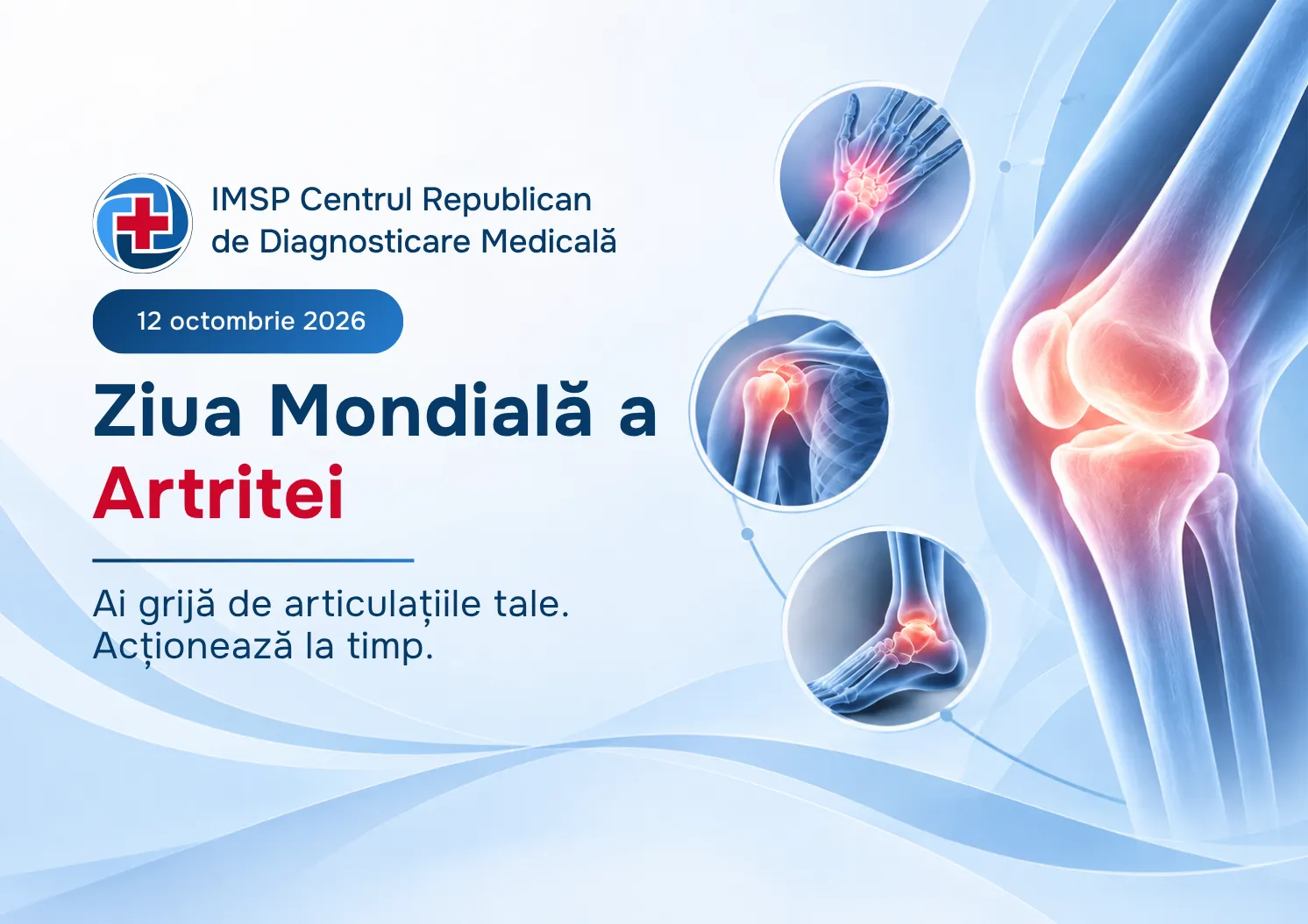
World Arthritis Day
Every year on October 12, World Arthritis Day is observed to raise awareness about rheumatic and musculoskeletal diseases, their impact on quality of life, and the importance of early diagnosis. Arthritis is a group of conditions that affect the joints and can manifest as pain, inflammation, stiffness, and limited mobility. Depending on the type of disease, symptoms may develop gradually or occur in episodes, affecting daily activities and quality of life.
What symptoms may indicate the presence of arthritis?
Symptoms vary depending on the form of the condition and each patient's individual characteristics. Among the most common symptoms are:
- persistent or recurrent joint pain;
- swelling and tenderness in the joints;
- joint stiffness, especially in the morning or after periods of rest;
- difficulty moving and reduced range of motion;
- a sensation of warmth or redness in the joint;
- fatigue, which may accompany certain inflammatory conditions.
The presence of these symptoms does not automatically indicate arthritis, but if they persist or worsen, a medical evaluation is necessary.
The Importance of Early Diagnosis
Early diagnosis of joint disorders allows for the determination of an appropriate medical approach and the initiation of treatment based on the type and stage of the disease. In the case of inflammatory arthritis, timely intervention can help reduce inflammation, limit joint damage, and maintain function.
The medical evaluation includes a clinical examination and, depending on the suspected diagnosis, laboratory and imaging tests. Methods such as X-rays and musculoskeletal ultrasound can provide important information about changes in the joints and surrounding tissues. The results of these investigations are interpreted in the context of clinical manifestations to help establish an accurate diagnosis and determine the appropriate course of treatment.
When is a medical consultation necessary?
It is recommended that you see a doctor if joint pain, stiffness, or swelling persists, recurs frequently, or interferes with daily activities. A joint that suddenly becomes very painful, swollen, and hot—especially when accompanied by a fever—requires urgent medical evaluation. Depending on the symptoms, the patient may be referred to a rheumatologist and undergo the necessary tests to confirm the diagnosis.
Maintaining Joint Health
Joint health care requires an individualized approach tailored to one’s health status and medical recommendations. Appropriate physical activity, maintaining a healthy body weight, and adhering to the prescribed treatment can help preserve mobility and manage symptoms. Additionally, avoiding self-medication and seeking medical advice when persistent symptoms arise are important steps in preventing delayed diagnosis and complications.
CRDM Specialists—Working with You for Joint Health
On World Arthritis Day, the IMSP Republican Center for Medical Diagnostics encourages the public to pay attention to their joint health and not to delay seeking medical evaluation when persistent pain, stiffness, or limited mobility occur.
At the IMSP Republican Medical Diagnostic Center, our specialists are available to provide consultations and assess your health, recommending the appropriate tests as needed. Identifying the cause of symptoms is an essential step in establishing a diagnosis and choosing the appropriate medical course of action. Do not ignore the signals your body is sending you. Seeing a doctor in a timely manner and undergoing the recommended tests help protect your joint health, maintain mobility, and preserve your quality of life.