International Radiology Day
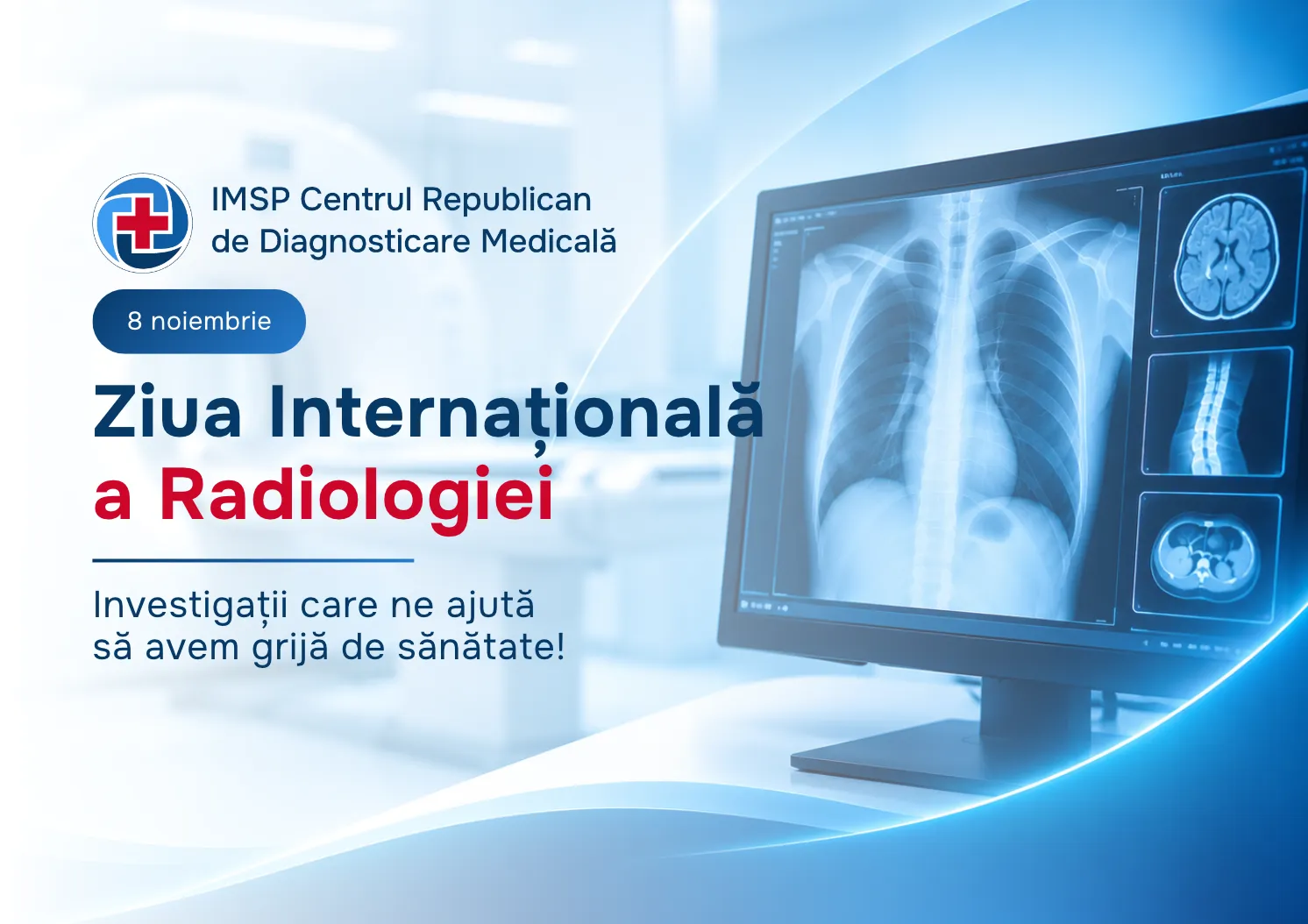
Every year on November 8, International Radiology Day is observed. It is an opportunity to discuss the role of imaging tests in diagnosing diseases and the work of specialists who, through modern technologies, help doctors better understand what is happening inside the body.
The date was chosen to commemorate the day in 1895 when German physicist Wilhelm Conrad Röntgen discovered X-rays. This discovery changed medicine forever, as it made it possible to examine the inside of the body without surgery.
Today, radiology is an integral part of many stages of medical care. An X-ray, a CT scan, or an MRI can provide information that a doctor cannot obtain through a routine examination alone. This allows for the detection of changes in organs and tissues, the identification of the causes of certain symptoms, and the monitoring of a condition’s progression.
How do imaging tests help us?
When pain, discomfort, or other symptoms occur, a doctor may recommend an imaging test to get a clearer picture of what is happening in the body. These tests are used in many fields of medicine, ranging from neurology and cardiology to orthopedics, urology, and oncology.
Depending on the health issue, various diagnostic methods may be recommended:
- X-ray – helps examine bones and certain organs, and is frequently used to detect fractures and evaluate the lungs;
- Computed tomography (CT) – provides detailed images of internal structures and can help identify lesions or changes in organs;
- Magnetic resonance imaging (MRI) – allows for a detailed examination of the brain, spine, joints, and soft tissues;
- Ultrasonography (Ultrasound) – uses ultrasound to examine organs and tissues without the use of ionizing radiation.
Each test has its own purpose and indications. The doctor is the one who recommends the appropriate test, based on the patient’s symptoms, medical history, and the information needed to make a diagnosis.
Why is it important not to delay the recommended tests?
Sometimes, our bodies send us signals that we shouldn't ignore. Persistent pain, unusual discomfort, or certain changes in our health may require further investigation.
The imaging tests recommended by your doctor can help identify the cause of these symptoms and, in some cases, detect certain conditions before the symptoms become more apparent.
It is important not to choose tests on our own or undergo them without a doctor’s recommendation. Not every symptom requires a CT scan or MRI. The doctor will decide which test is appropriate and will interpret the results along with other information about the patient’s condition.
What imaging tests can you have done at CRDM?
At the IMSP Republican Medical Diagnostic Center, patients can undergo various types of tests to examine and assess their health.
The following are available at the institution:
- Radiology and computed tomography (CT);
- Magnetic resonance imaging (MRI);
- General ultrasonography;
- Echocardiography and other functional diagnostic tests.
These tests are recommended based on each patient’s needs and the doctor’s instructions. The results provide useful information for establishing a diagnosis, determining a course of treatment, and monitoring the progression of certain conditions.
Behind every investigation lies a commitment to the patient
On International Radiology Day, the IMSP Republican Center for Medical Diagnostics extends its appreciation to specialists in radiology and medical imaging, as well as to all professionals who contribute to the diagnostic process.
For the patient, a medical evaluation can provide answers to questions that concern them, greater clarity, and the opportunity to take the next step in their healthcare.
Sometimes, to better understand what is happening inside the body, we need to look beyond what is visible. Radiology helps us do just that!