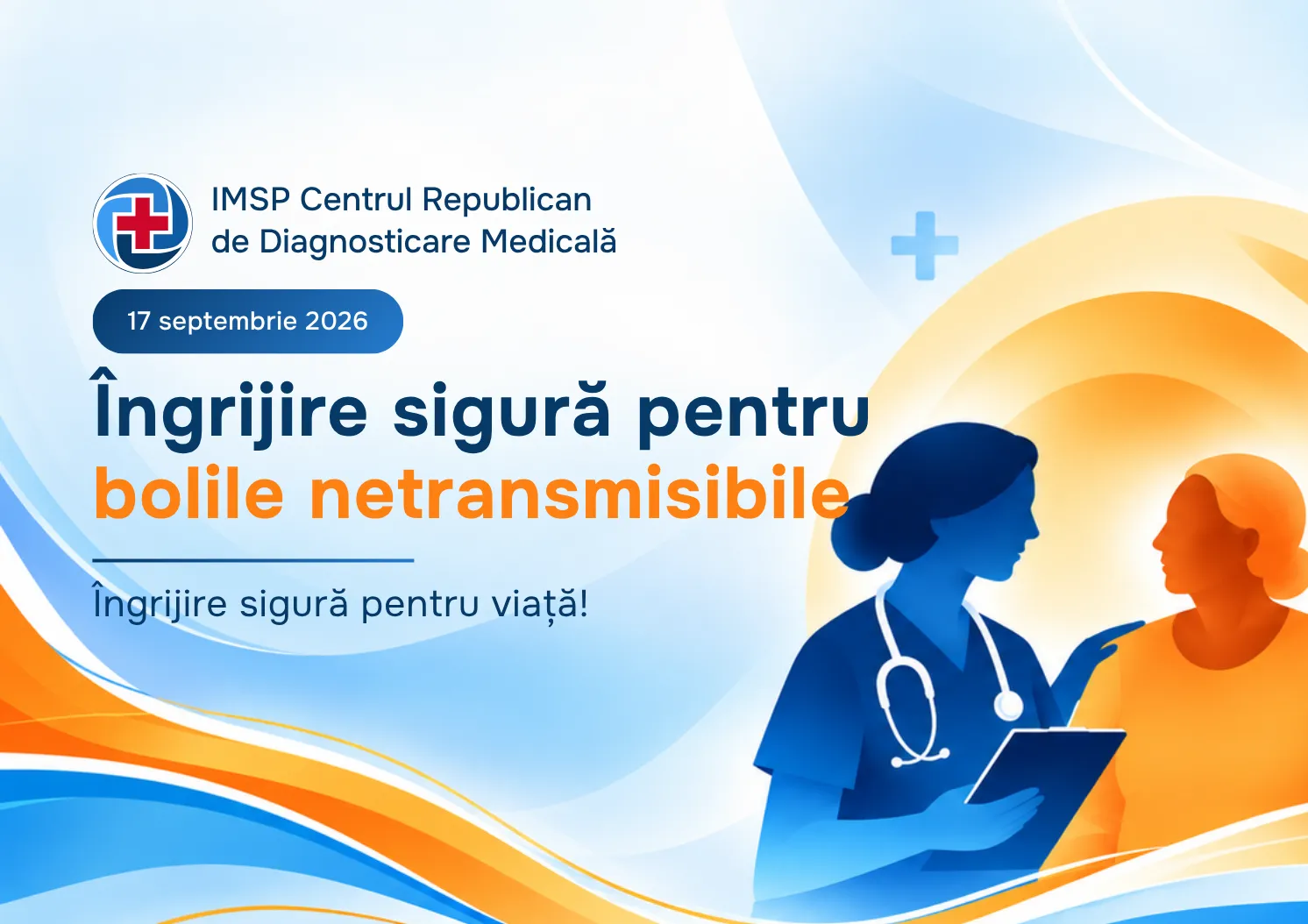
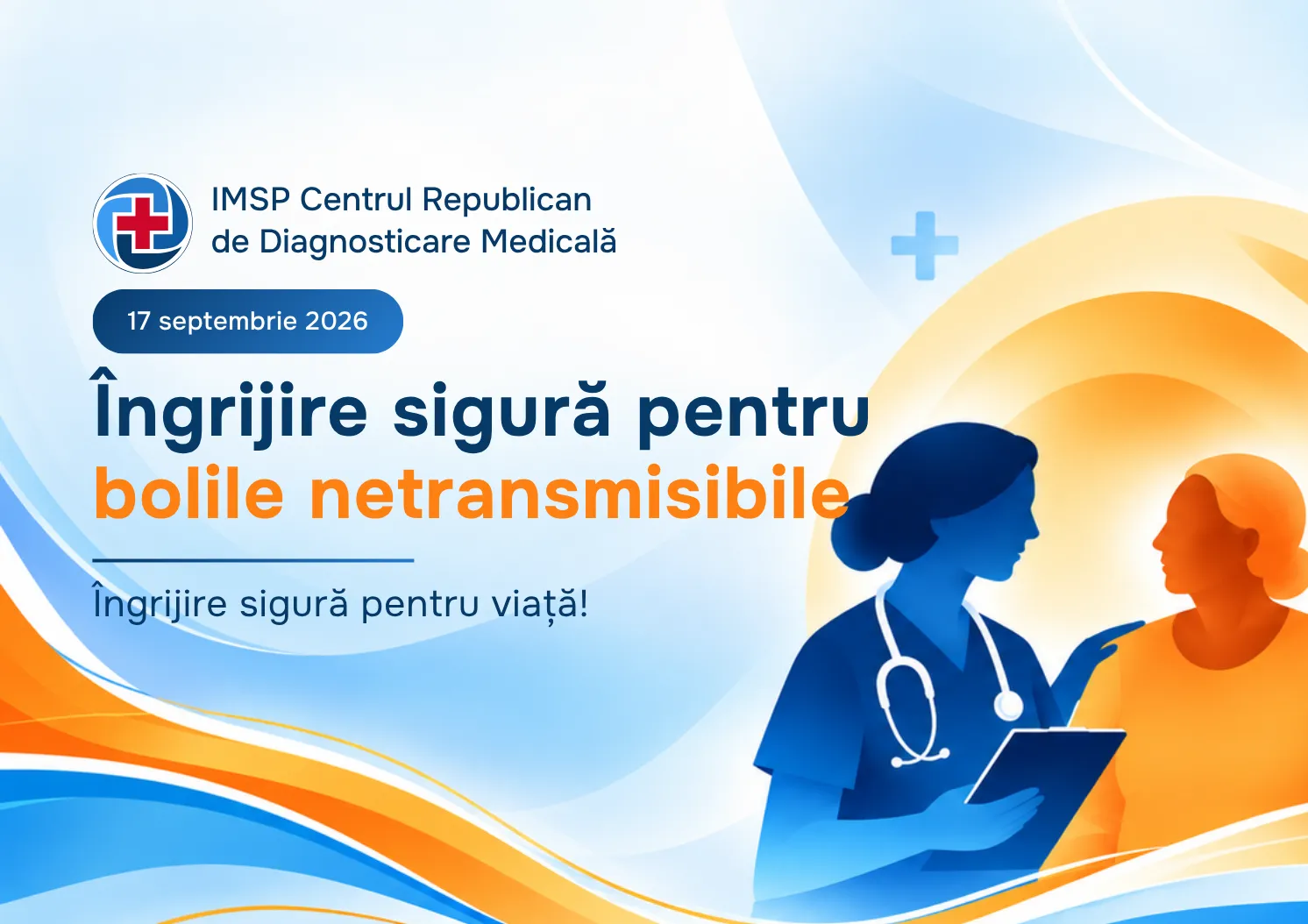
World Patient Safety Day 2026: Safe Care for Noncommunicable Diseases
On September 17, we observe World Patient Safety Day—an important occasion to draw attention to a fundamental principle of the healthcare system: every patient has the right to safe, high-quality care that respects their needs.
This year’s theme is “Safe Care for Noncommunicable Diseases,” and the campaign’s slogan is “Safe Care for Life!” At the IMSP Republican Center for Medical Diagnostics, we support this initiative and believe that patient safety must be a priority at every stage of the medical journey—from prevention and early detection to diagnosis, treatment, and monitoring.
Patient safety begins with proper and continuous care
Noncommunicable diseases, such as high blood pressure, diabetes, cardiovascular disease, cancer, and chronic respiratory diseases, often require long-term medical supervision and care. For these patients, safety is not limited to a single consultation or test. It involves a well-coordinated care pathway in which information is accurately communicated, results are carefully evaluated, recommendations are understood, and the patient receives continuity of care.
Prevention → early detection → accurate diagnosis → appropriate treatment → monitoring and continuity of care.
Every step counts.
An accurate diagnosis is an important step toward safe care
Medical tests and diagnosis play a vital role in identifying and monitoring health issues. Safe care involves not only performing the necessary tests, but also providing the patient with accurate information, clearly communicating the results, and guiding them through the next steps in their care. That is why we encourage patients not to shy away from asking questions when information is unclear and to discuss the results of their tests and the recommendations they receive with their healthcare providers.
An informed patient can actively participate in their own care.
The patient is a partner in his or her own safety.
Patient safety is not the responsibility of just one person
Doctors and medical staff are responsible for providing safe care and clear information, and patients and their families play an important role in communication and in making decisions about care.
That is why we encourage patients to:
- share important information about their health with their doctor;
- tell us what medications they are taking;
- ask questions when they don't understand a recommendation;
- asks for an explanation regarding the investigations and their results;
- inform medical staff about any unusual reactions or changes;
- participate in decisions regarding treatment;
- follow the established medical recommendations and checkups.
Ask questions. Stay informed. Get involved.
These three simple steps can help improve communication and ensure a safer medical experience.
5 Questions for Safer Care
When we go to the doctor or undergo medical tests, it is important to understand our health situation as well as possible. That is why every patient should consider these five questions:
- What is my health status, and what does the diagnosis mean for me?
Understanding your diagnosis helps you be better informed and take an active role in decisions about your own care.
- What tests are necessary, and why?
Ask what the purpose of the recommended investigations is and what information they can provide.
- What are the treatment options, and what are their benefits and risks?
Talk to a specialist about the available options and what's right for your situation.
- What can I do to prevent complications and stay healthy?
Ask what steps can help maintain good health and reduce risks.
- Where can I get support and additional information?
It's important to know who to turn to when you need additional information or support.
Clear communication is part of patient safety
Safe care requires communication in which the patient is listened to, informed, and respected. Sometimes, a question asked at the right time can clarify a recommendation, help the patient understand a test result, or help identify a problem that requires attention. That is why we encourage open dialogue between patients and healthcare professionals.
There are no unnecessary questions when it comes to your own health.
Respect for Patients' Rights
Patient safety is closely linked to respect for patients’ rights. Every person should receive timely and appropriate care, clear information, respect for their dignity and privacy, confidentiality, and the opportunity to participate in decisions regarding their own care. An informed and respected patient is an active partner in the care process.
Together for Safer Care
At the IMSP Republican Center for Medical Diagnostics, we place special emphasis on patient safety through professionalism, clear communication, responsibility, and commitment. We believe that safe care is built through collaboration between the patient, their family, and healthcare professionals. For people living with noncommunicable diseases, this collaboration is all the more important, as the medical journey can be a long one and may involve multiple stages of diagnosis, treatment, and monitoring. Through information, open communication, and engagement, we work together to ensure a safer medical journey and high-quality care for every patient.
Safe Care for Life!