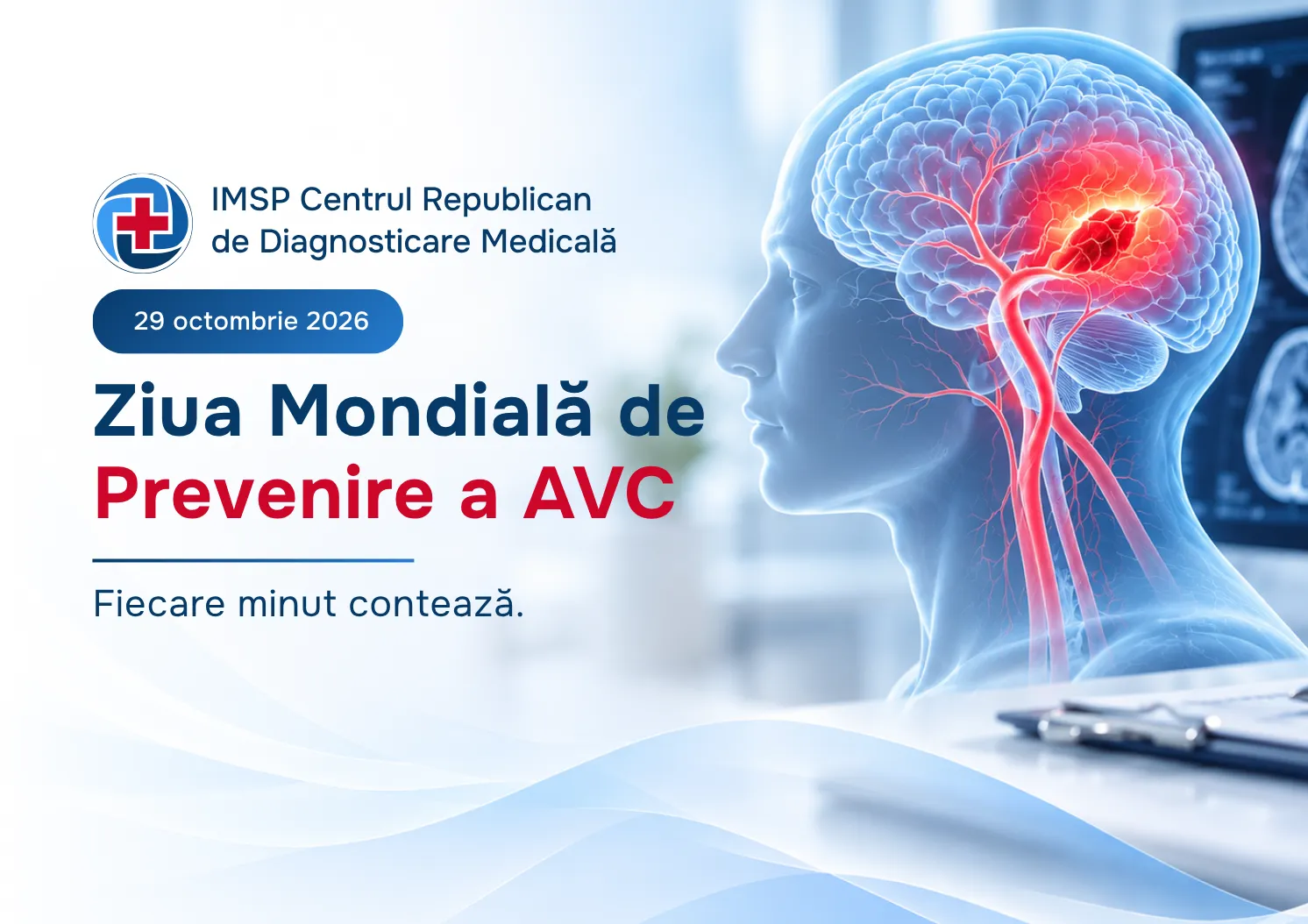
World Stroke Prevention Day
Every year on October 29, World Stroke Prevention Day is observed—an international initiative dedicated to educating the public about risk factors, recognizing symptoms, and the importance of emergency medical care. A stroke is a major medical emergency that occurs when blood flow to a part of the brain is interrupted or when a blood vessel in the brain ruptures and causes bleeding. Without prompt intervention, brain cells can be damaged, with possible consequences for speech, mobility, memory, and the ability to perform daily activities.
The message of the 2026 international campaign—“Every Minute Counts”—emphasizes the importance of quickly recognizing the signs of a stroke and seeking immediate medical help.
How can we recognize the signs of a stroke?
The symptoms of a stroke often appear suddenly. Recognizing them can help save lives and reduce the risk of disability. Among the most common signs are:
Facial asymmetry: one corner of the mouth drops, and the smile becomes asymmetrical.
Weakness in an arm or a leg: the person is unable to lift or control a limb normally, usually on one side of the body.
Speech Disorders: difficulty expressing oneself, slurred speech, or an inability to understand what others are saying.
Vision problems: sudden loss of vision or double vision.
Loss of balance and coordination: sudden dizziness, difficulty walking, or unsteadiness.
A severe headache that came on suddenly, especially if it is accompanied by other neurological symptoms.
Not all of these symptoms need to be present at the same time. Even a single symptom that appears suddenly may indicate a stroke.
What should you do? Call 112 immediately if you suspect a stroke. Do not wait for the symptoms to go away, and do not delay seeking medical help. If possible, note the time when the first symptoms appeared and share this information with the medical team.
Risk Factors and Stroke Prevention
Major risk factors include high blood pressure, high cholesterol, diabetes, smoking, being overweight, a sedentary lifestyle, a high-sodium diet, and certain cardiovascular conditions. Although age and personal history cannot be changed, the risk can be reduced by managing the modifiable factors.
Prevention involves regularly monitoring blood pressure, blood sugar, and cholesterol levels; adopting a balanced diet; engaging in regular physical activity; quitting smoking; and following the treatment prescribed by your doctor. Regular medical checkups help with the early detection of health problems and reduce the risk of stroke. The Republican Center for Medical Diagnostics urges you to monitor your health regularly and pay attention to cardiovascular risk factors. Recognizing symptoms quickly and calling 112 immediately can save lives.
In the event of a stroke, every minute counts.